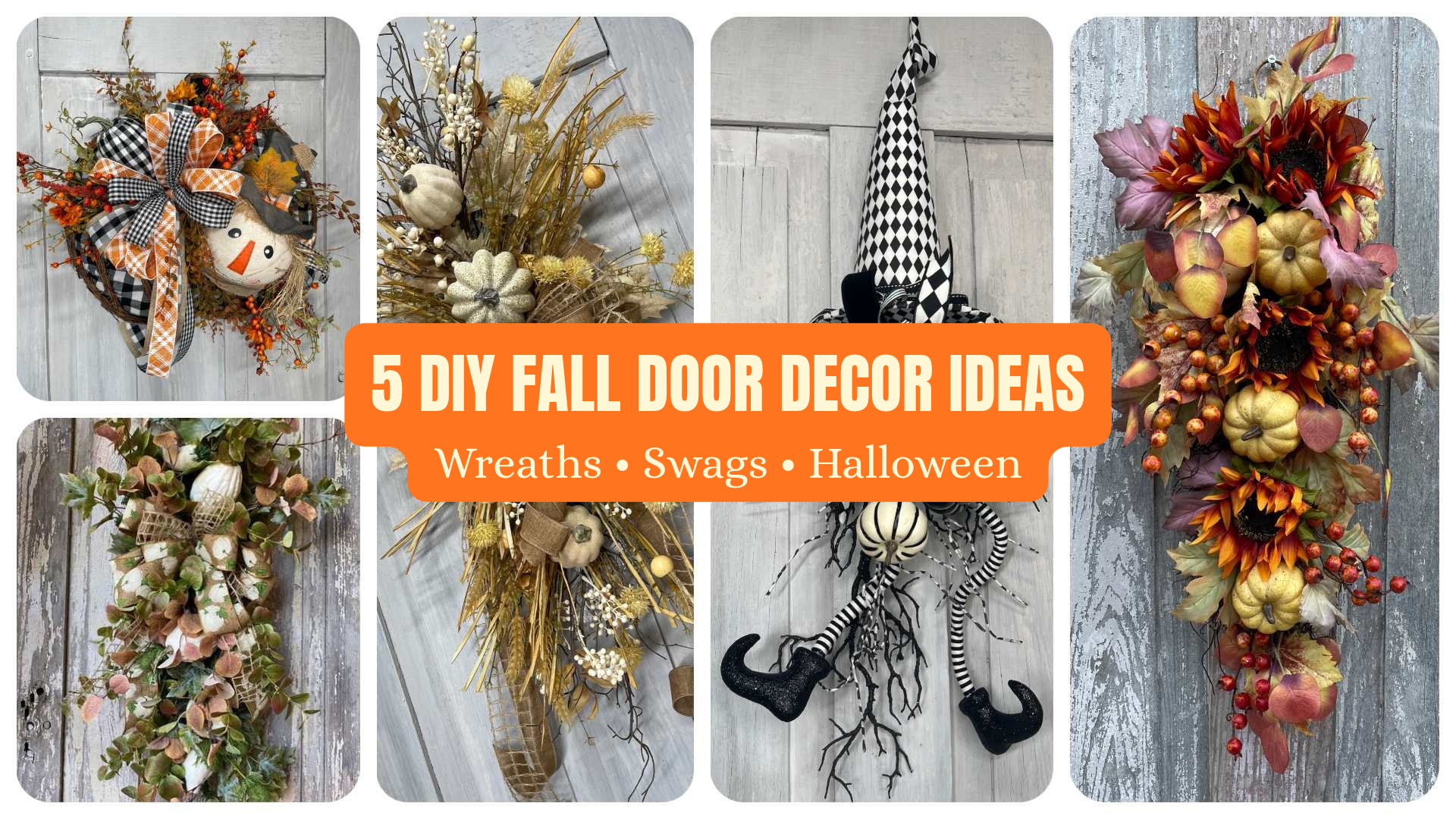
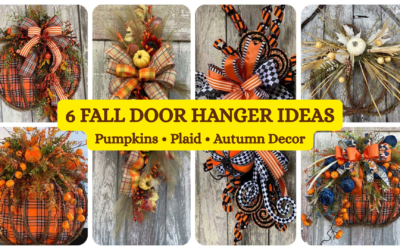
Your front door is one of the first places to show off your decorating style, and these DIY fall door decor ideas give you five very different ways to welcome autumn.
Whether you love colorful pumpkins and ribbon, soft neutral textures, a cheerful scarecrow or a whimsical witch, there’s something here to inspire your next project.
In this collection, Kelea shares practical techniques for creating fuller arrangements, securing decorative accents, shaping greenery and adding movement to wreaths and swags.
Explore All 5 DIY Fall Door Decor Ideas — Compilation 1625
1. Colorful Pumpkin and Pampas Grass Fall Door Swag
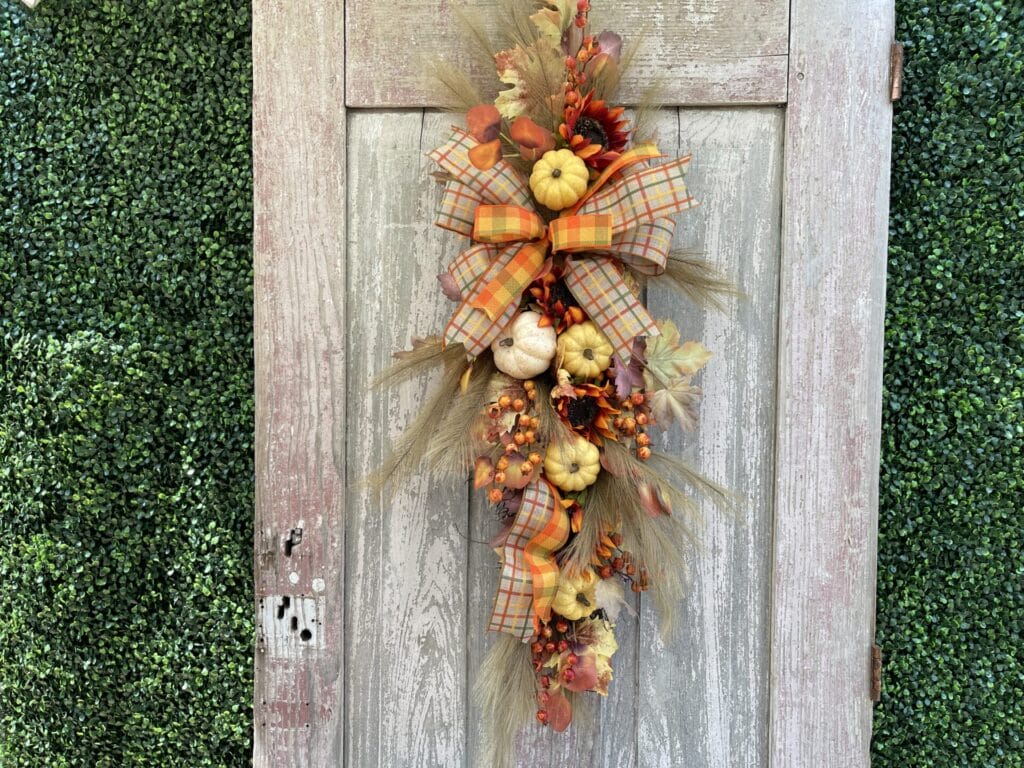
If you love traditional autumn colors, this pumpkin swag is a beautiful place to begin.
The design combines pumpkins, sunflowers, berries, pampas grass and a colorful plaid bow on a premade angel vine base.
Kelea demonstrates how to turn a premade floral swag into a more detailed arrangement without rebuilding the entire foundation.
What you’ll learn
The key is creating movement and dimension rather than simply adding more flowers.
Kelea positions the pampas grass at staggered heights, shifts the direction of the stems below the bow and shapes wired materials so some sit in the foreground while others remain behind.
She also leaves an opening for the bow, allowing it to nestle into the arrangement instead of sitting awkwardly on top.
A final ribbon tail adds length and movement to the bottom of the swag.
Designer takeaway: A premade base can save time while still giving you plenty of opportunities to create a distinctive finished design.
2. Neutral White Pumpkin and Wheat Door Swag

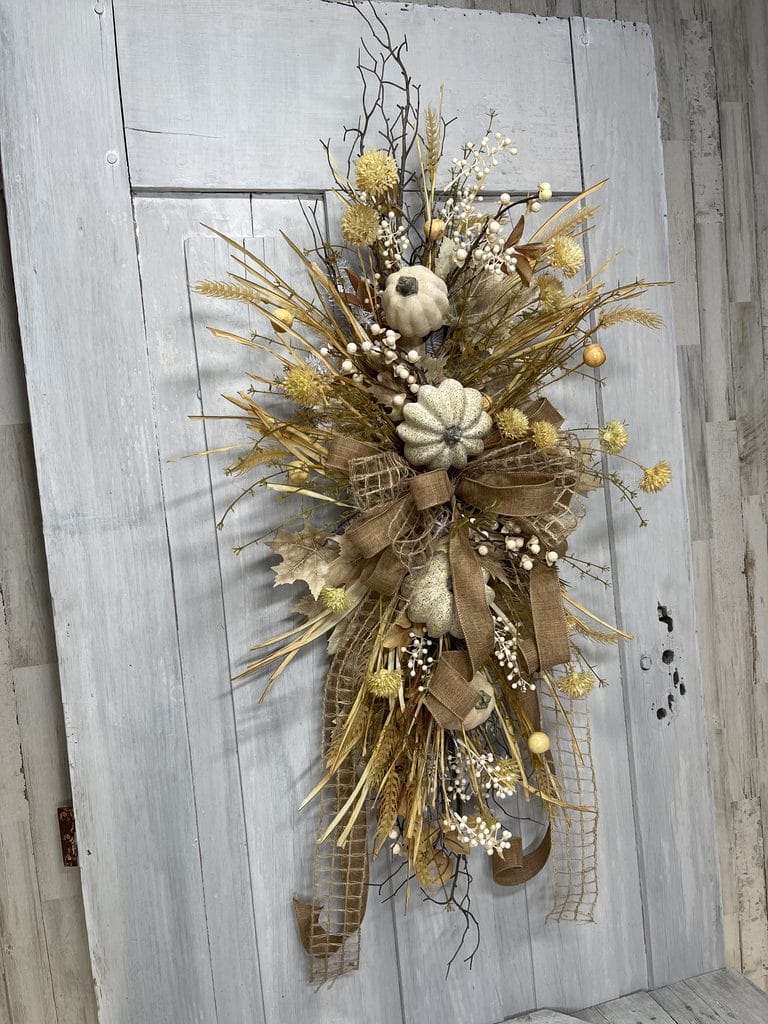
Prefer softer autumn colors? This elegant fall swag combines creamy white pumpkins, natural grasses, wheat, berries and a neutral ribbon bow.
The lighter palette creates a beautiful alternative to traditional orange autumn decorations.
What you’ll learn
Kelea uses a white pine swag base and positions twig sprays at the top and bottom to establish the design’s height.
Pumpkin sprays are layered between those twigs, with a central opening reserved for the bow.
She then separates wheat and allium bushes into smaller sections, placing them throughout the design to add movement and soften the stronger lines.
One particularly useful technique is saving small pieces cut from larger sprays and reusing them around the bow.
Designer takeaway: Natural textures, thoughtful placement and a limited color palette can create a full arrangement without overwhelming the design.
3. Scarecrow Pumpkin Fall Wreath
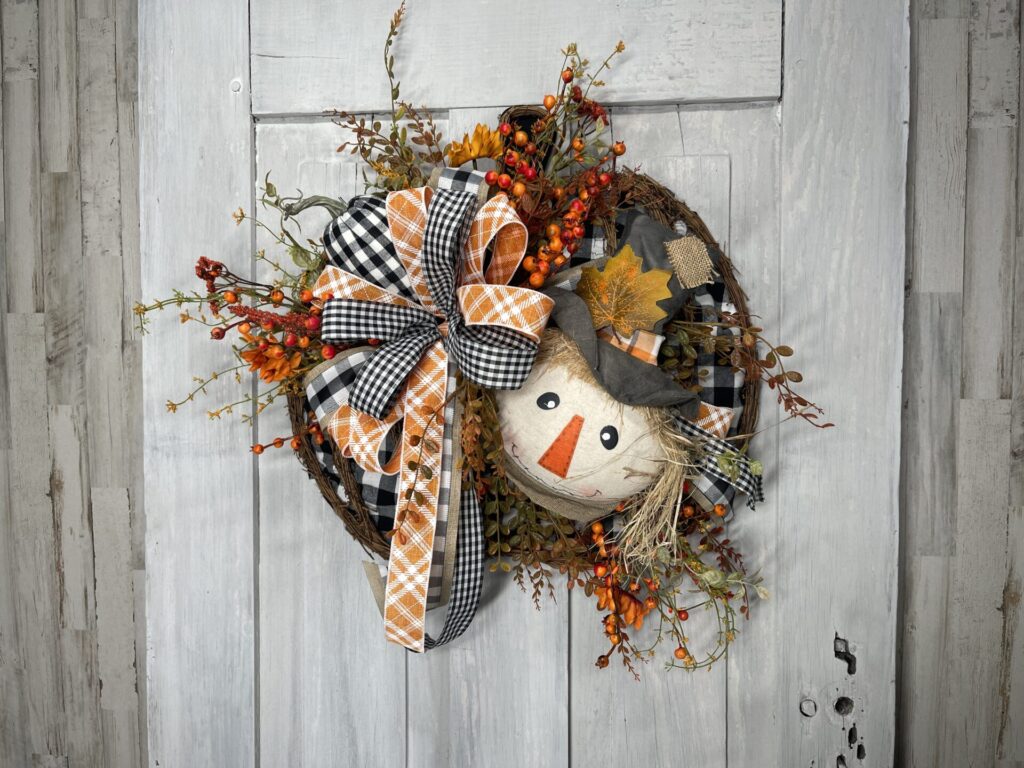
This cheerful scarecrow wreath brings together autumn personality and classic floral design.
A smiling scarecrow, coordinating pumpkin, plaid ribbon, sunflowers, greenery and berries create a colorful front door decoration.
What you’ll learn
Kelea begins by securing floral foam to the wreath base so the decorative elements have a reliable foundation.
Rather than attaching everything immediately, she tests different placements for the bow, pumpkin and scarecrow head.
Once she’s happy with the arrangement, she uses wooden dowels to position the pumpkin and scarecrow at complementary angles.
Greenery creates the background, while sunflowers and berries add color and dimension.
Designer takeaway: Before attaching your focal pieces, experiment with their placement. Changing an angle can completely transform the finished wreath.
4. Black and White Witch Door Swag
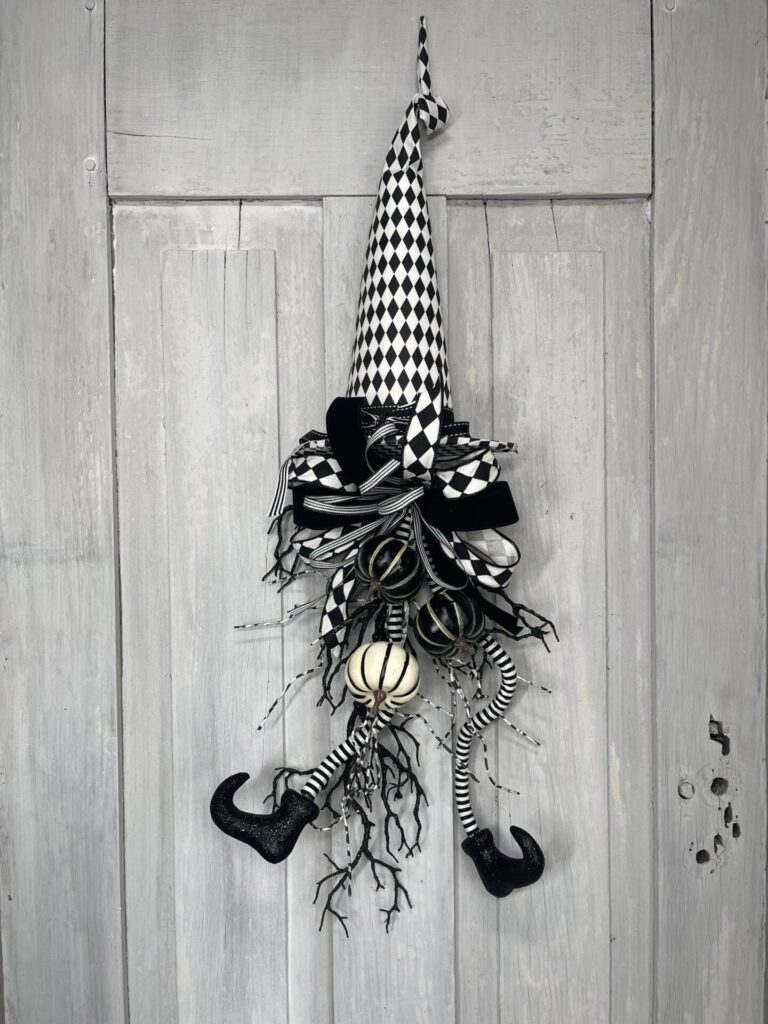
Who says autumn decorating has to be traditional?
This playful witch swag features a tall black-and-white patterned hat, striped legs, curled shoes, coordinating pumpkins and bold ribbon.
It’s a fun choice for anyone who enjoys decorating for Halloween.
What you’ll learn
Kelea creates the foundation using a decorative branch rather than relying on a traditional wreath form.
She shapes the branch, positions the witch legs and secures the components with cable ties and floral pins.
The hat becomes the upper focal point, while the bow, pumpkins and playful legs create the illusion of a complete witch character.
Designer takeaway: A creative door decoration doesn’t always require a traditional wreath base. Sometimes the decorative components themselves can establish the structure.
5. Soft Neutral Pumpkin and Greenery Fall Swag
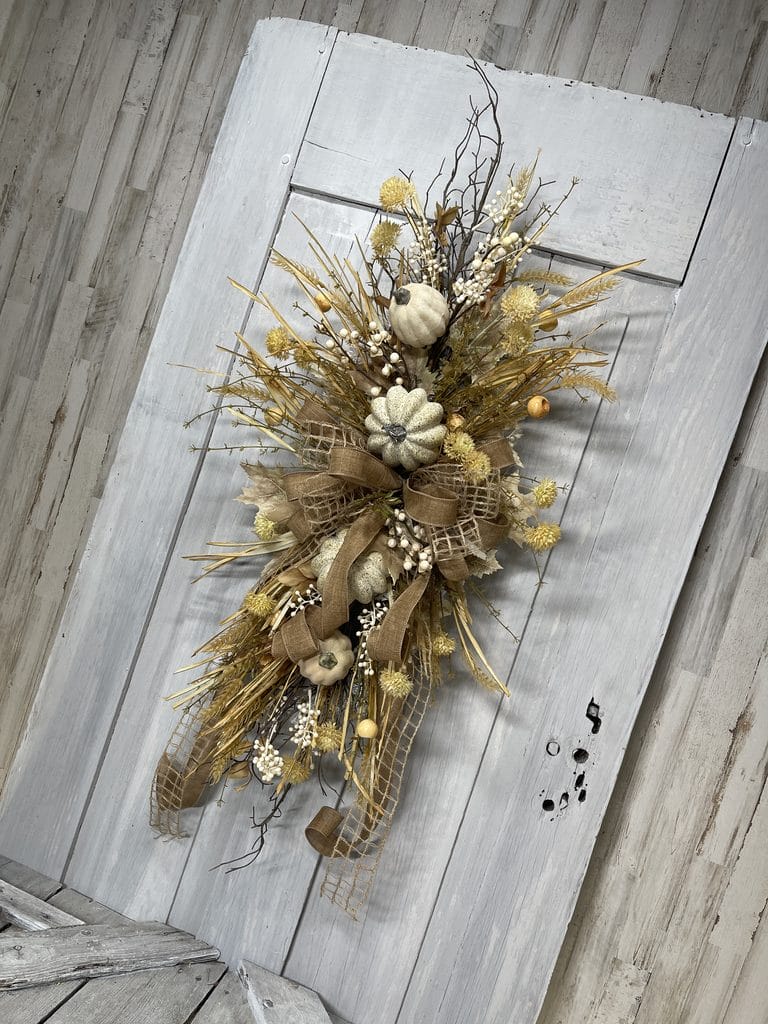
This final design is perfect for anyone who loves natural, understated autumn decor.
Soft white pumpkins, muted foliage, greenery and textured ribbon create a relaxed, organic look.
What you’ll learn
This design is a reminder that color doesn’t have to be bold to make an impact.
The different shades of green, cream and muted autumn foliage provide visual interest through texture and layering.
Notice how the pumpkins become focal points among the greenery instead of overpowering it.
Designer takeaway: When you’re using a subtle palette, vary the shapes, textures and direction of your materials to create interest.
5 Floral Design Techniques You Can Use on Your Next Door Decoration
Although these projects have very different personalities, several of Kelea’s favorite design principles apply to all of them.
Create a transition point
A transition point is where the direction of your floral materials changes.
In many swags, the bow sits near this area, helping connect the upward and downward movement of the arrangement.
Layer the foreground and background
Don’t position every stem at the same depth.
Allow some greenery to sit behind the focal pieces while smaller materials extend forward. This gives the design a fuller, more dimensional appearance.
Shape wired stems before attaching them
Kelea often refers to this as shaking hands with your florals.
Opening and shaping the branches before placement allows you to take advantage of their movement and create a more natural-looking arrangement.
Secure the important pieces
Larger attachments, bows and heavy decorative components need reliable support.
Depending on the project, Kelea uses floral foam, cable ties, floral pins, wooden dowels and hot glue.
A well-constructed arrangement should look beautiful from the front while remaining secure behind the scenes.
Make your ribbon part of the design
Ribbon can do more than fill an empty spot.
Use bows to establish a focal point, introduce coordinating colors and connect the different sections of your arrangement.
Long ribbon tails can also add movement and help extend the silhouette.
Frequently Asked Questions About DIY Fall Door Decor
What’s the difference between a fall wreath and a fall door swag?
A wreath generally follows a circular form, while a swag typically has an elongated or cascading shape. Both can be customized with florals, pumpkins, ribbon and decorative accents.
Can beginners make a fall door swag?
Yes. Starting with a premade swag base can simplify construction and allow you to focus on arranging the additional materials.
How can I make a fall swag look fuller?
Shape your wired stems, stagger their heights, add layers at different depths and use smaller floral pieces to fill openings around the focal points.
Can I use neutral fall decorations through Thanksgiving?
Absolutely. White pumpkins, wheat, greenery and natural textures work beautifully throughout the autumn season.
How do I make sure my wreath decorations stay attached?
Choose attachment methods that suit the weight and construction of your base. Heavier decorative pieces often benefit from more than one secure attachment point.
Find Your Favorite Fall Door Decor Style
The best part about these five projects is how different they are.
You can choose traditional autumn colors, a natural neutral palette, a cheerful scarecrow or a playful Halloween witch.
And as you follow along with Kelea, you’ll learn techniques that can be used again in your own wreaths, swags and seasonal floral arrangements.
Explore All 5 Fall Door Decor Designs and Their Supply Lists
Want to build more confidence with floral design? Visit Kelea’s Design School to learn more about Kelea’s tutorials and membership.
Which of these five designs would you choose for your front door?