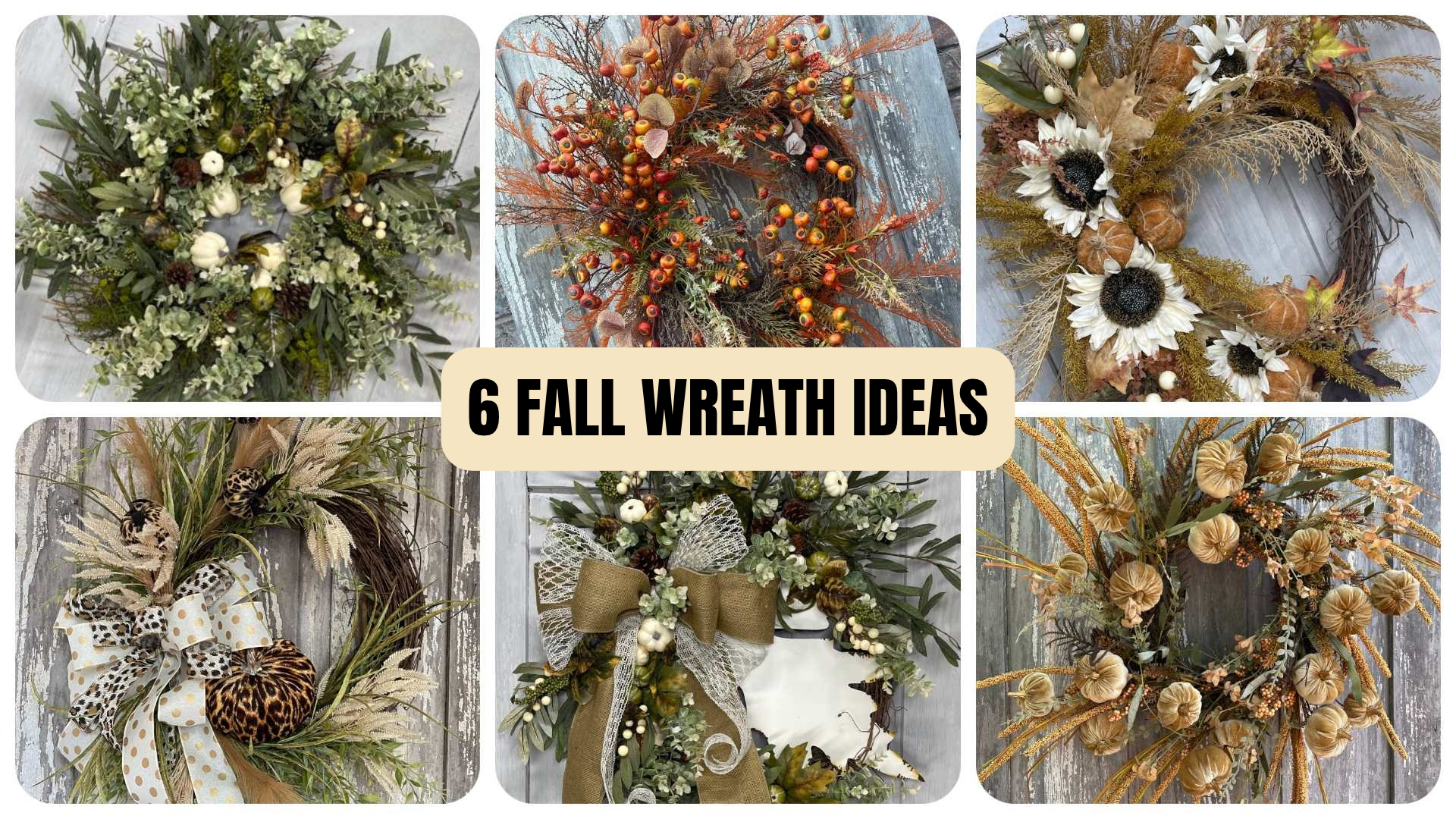
Looking for DIY fall grapevine wreath ideas that go beyond the traditional pumpkin-and-bow combination? These six autumn wreath designs show just how versatile a grapevine foundation can be.
From soft white pumpkins and olive greenery to colorful berries, sunflowers, textured harvest materials and leopard-print ribbon, each design has its own personality.
In this compilation, Kelea shares floral design techniques you can use again and again, including creating movement, layering stems, arranging focal pieces and hiding your mechanics for a polished finish.
Explore All 6 Fall Grapevine Wreath Ideas and Supply Lists
Watch Kelea Create These Fall Grapevine Wreaths
Follow along with the full video to see the designs and techniques in action.
1. Neutral White Pumpkin and Greenery Fall Wreath

If you love autumn decorations that feel natural and understated, this wreath is a beautiful choice.
Small white and soft green pumpkins are tucked among olive leaves, eucalyptus and muted greenery. The gentle color palette lets the textures and shapes become the focus.
What Kelea teaches
Kelea begins with a prepared moss wreath base and works around the form to shape and organize the existing greenery.
The pumpkin picks help establish the structure, while olive branches and eucalyptus fill the spaces between them.
By distributing the materials around the wreath rather than clustering everything in one spot, she creates a balanced design with plenty of natural movement.
Designer takeaway: A limited color palette can still produce a detailed wreath when you combine different leaf shapes, stem lengths and textures.
2. Wispy Autumn Berry Grapevine Wreath
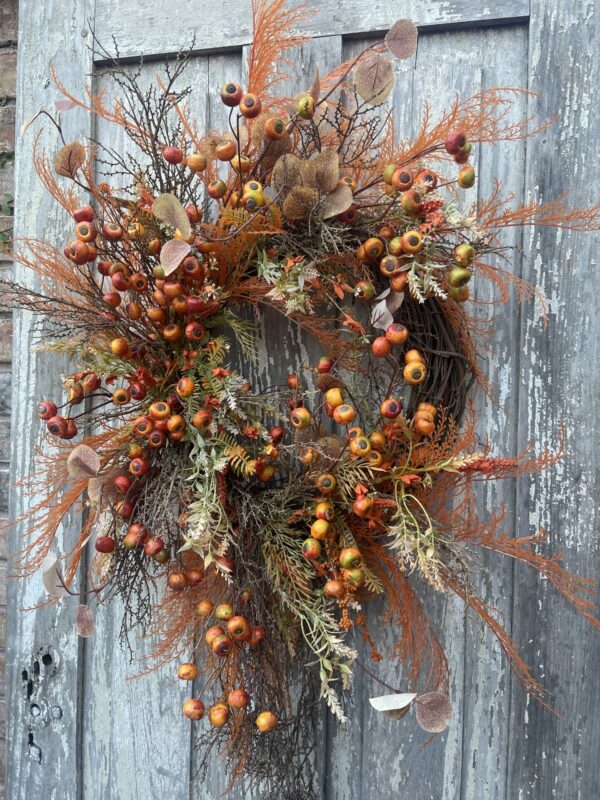
This design is for anyone who loves the colors of autumn and a wreath with dramatic movement.
Orange and golden berries, wispy foliage, cascading twigs and greenery create a full, airy look without relying on a large bow.
What Kelea teaches
Kelea starts by establishing the wreath’s outer shape with long, feathery stems.
Next, she layers twigs, eucalyptus and berry sprays, allowing some pieces to extend upward while others trail downward.
She places the brighter orange materials farther back, then brings deeper brown textures and greenery forward to create depth.
A particularly useful lesson is how she handles the transition point—the area where the design changes direction. Rather than covering it with a bow, she fills it with carefully placed foliage and berries.
Designer takeaway: You don’t need a bow to create a focal point. Direction, texture and contrasting layers can do the work beautifully.
3. Rustic Sunflower and Pumpkin Grapevine Wreath
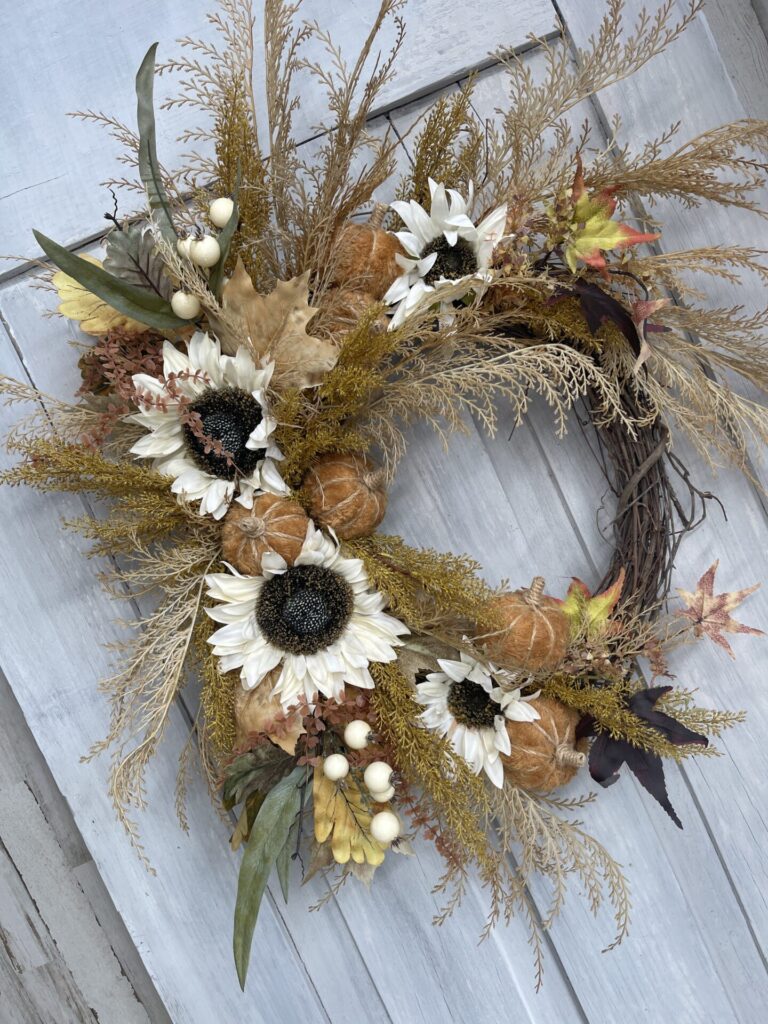
Creamy sunflowers with dark centers, warm grasses, soft pumpkins and natural-looking branches give this wreath a beautiful harvest personality.
The open grapevine foundation remains part of the design, making the arrangement feel organic rather than overly filled.
What Kelea teaches
The technique to notice is how Kelea establishes the perimeter with wispy materials before adding the larger decorative elements.
Sunflowers and pumpkins become the focal pieces, while grasses and smaller floral accents connect the different sections.
She bends and shapes the stems so they follow the wreath’s natural curve instead of projecting straight out.
Designer takeaway: Leave some of the grapevine visible. Negative space can be just as important as the flowers when creating a natural-looking wreath.
4. Leopard Pumpkin and Ribbon Fall Wreath

Want an autumn wreath with a little more personality?
This design combines a leopard-print pumpkin, coordinating patterned ribbon, light greenery, grasses and soft wheat textures.
The oversized bow immediately catches your attention, while the surrounding materials give it a finished, designer look.
What Kelea teaches
Kelea uses a lighter green fishtail fern to connect the greenery with the softer colors in the ribbon.
She positions the bow early in the process, allowing it to establish the main focal area before arranging the pumpkin and remaining materials.
The leopard pumpkin sits near the bow, and wheat and grasses extend outward to add height and movement.
This is also a useful example of how a generously sized bow can fill visual space without requiring as many additional floral stems.
Designer takeaway: Let your ribbon influence the rest of your material choices. Coordinating colors and textures make a bold pattern feel intentional.
5. Cottage-Style Pumpkin and Maple Leaf Grapevine Wreath
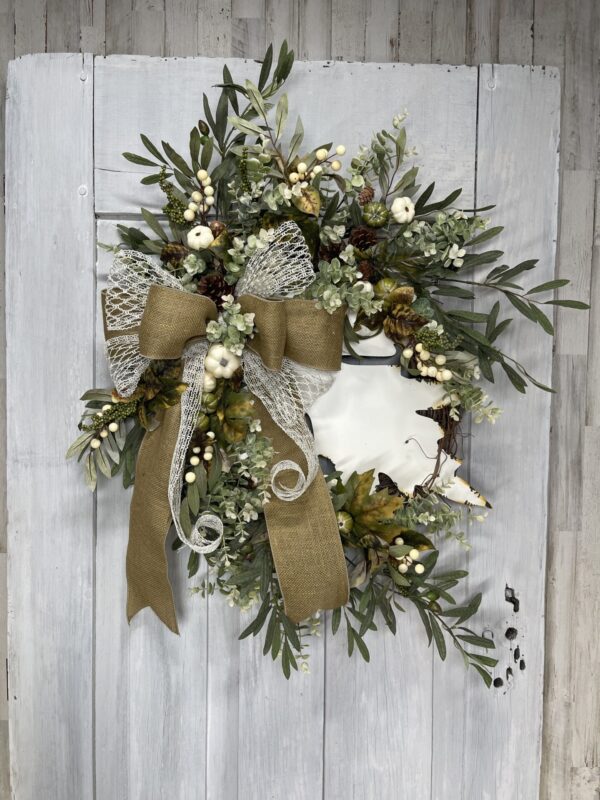
This design brings a softer cottage-inspired approach to fall decorating.
White pumpkins, muted eucalyptus, olive greenery and a natural jute bow are arranged around a decorative maple leaf.
The finished wreath feels detailed and welcoming without using a bright autumn palette.
What Kelea teaches
Kelea attaches the maple leaf to an 18-inch grapevine base, securing it so it won’t move against the door.
She then builds the outer perimeter with olive branches, working around the position planned for the bow.
One of the most useful techniques in this tutorial is cutting a pumpkin garland into individual sections. This creates several floral picks from one longer piece and makes it easier to distribute the pumpkins around the design.
Kelea also uses a zigzag placement technique with eucalyptus, alternating stems between the foreground and background.
Finally, the jute bow sits at the transition point, with pumpkins and greenery tucked around the loops and tails.
Designer takeaway: Cutting apart a garland gives you more flexibility when positioning materials, and layering them around a focal piece creates a more dimensional arrangement.
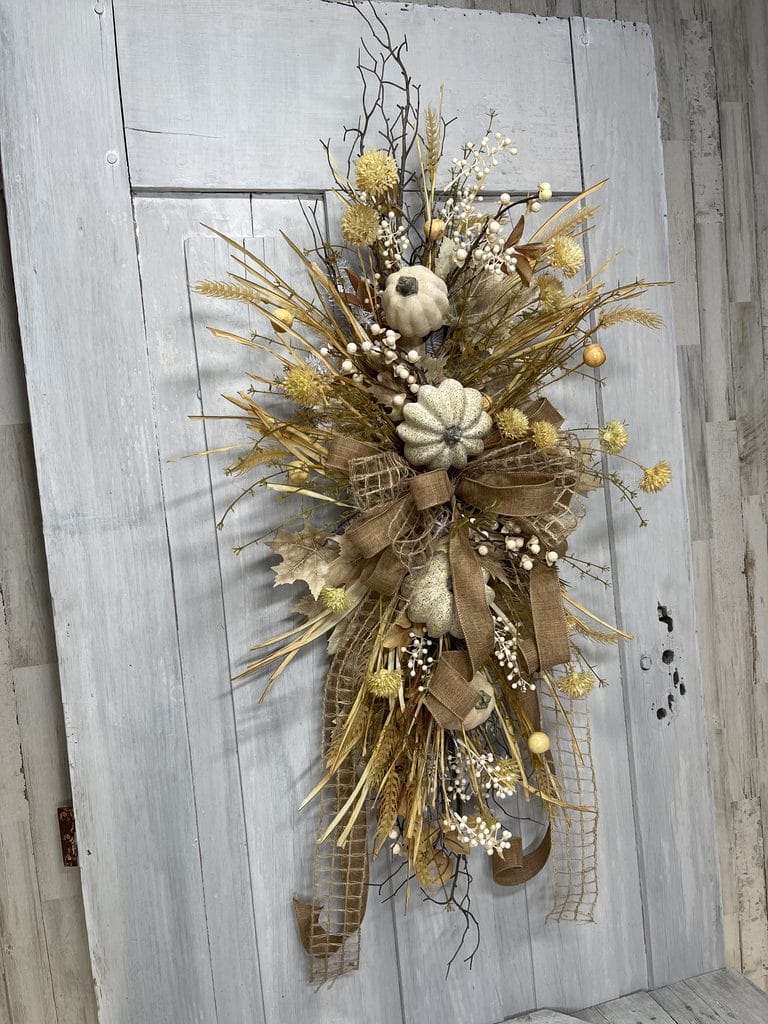
6. Natural Harvest Grapevine Wreath with Wheat and Seed Pods
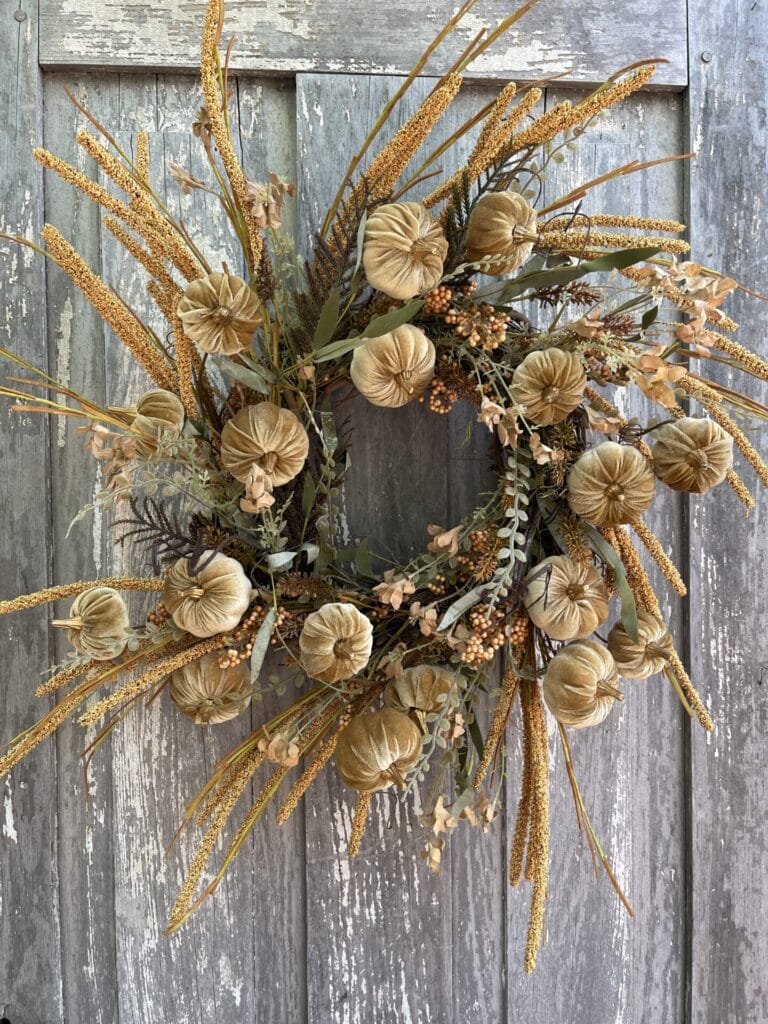
For a different take on autumn, this wreath focuses on golden wheat, delicate seed pods, berries and dried-looking botanical textures.
Its warm tan and golden colors make it an excellent choice for someone who prefers natural harvest decor.
What to notice in this design
The long wheat stems establish an expressive silhouette around the grapevine base.
Rounded velvet pumpkins contrast with the slender grasses, while smaller leaves help connect the elements.
The open center keeps the arrangement from feeling too heavy, even with materials extending well beyond the grapevine.
Designer takeaway: Mix long, narrow materials with rounded accents to create contrast. You can make a strong statement without covering every inch of the wreath base.
Floral Design Techniques You Can Use in Any Fall Grapevine Wreath
1. Build the perimeter first
Kelea frequently begins with longer stems to establish the overall size and direction of a design.
This gives you a framework for adding shorter greenery, pumpkins and decorative accents.
2. Shape every wired stem
Don’t use your floral materials exactly as they come out of the package.
Separate the branches, bend them into natural positions and make sure each piece contributes to the shape of the wreath.
Kelea often calls this shaking hands with your florals.
3. Create depth with layering
Some stems should sit behind the focal pieces, while others extend into the foreground.
This prevents the wreath from looking flat and helps the different materials blend together.
4. Pay attention to transition points
The transition point is where the direction of your arrangement changes.
It can be emphasized with a bow, pumpkin, large flower or a cluster of greenery and berries.
5. Use Spanish moss to hide mechanics
When working with grapevine, Kelea uses Spanish moss to conceal visible glue and help secure stems in open areas.
The result is a more polished design without distracting attachment points.
6. Make the most of your supplies
Cutting apart bushes and garlands allows you to distribute materials more evenly.
If one area needs a little more coverage, you may be able to use a leftover section or reposition a stem rather than adding an entirely new bush.
Frequently Asked Questions About Fall Grapevine Wreaths
What makes a grapevine wreath a good base for fall decorating?
Grapevine provides a sturdy, natural-looking foundation that works with pumpkins, berries, flowers, grasses and greenery. You can also leave sections exposed for a more organic appearance.
Do I have to add a bow to my fall wreath?
No. Some designs use a bow as the main focal point, while others rely on floral materials, pumpkins or dramatic stem placement.
How do I make a grapevine wreath look fuller?
Start with longer greenery to establish the shape, then layer shorter stems at different depths. Shape wired materials and use small pieces to fill visible gaps.
Can I make a fall wreath without traditional orange colors?
Absolutely. White pumpkins, olive greenery, neutral ribbons and wheat are beautiful alternatives that still communicate the autumn season.
How do I hide glue on a grapevine wreath?
Small pieces of Spanish moss can help conceal attachment points and blend them into the natural base.
Which Fall Grapevine Wreath Will You Make?
These six designs prove that autumn wreaths don’t have to follow one formula.
You can choose a soft neutral look, a bold berry wreath, a rustic sunflower arrangement, playful leopard accents or natural harvest textures.
More importantly, each project gives you techniques you can use to create your own floral designs with greater confidence.
See All 6 Fall Grapevine Wreath Ideas and Supply Lists — Compilation 1641
Want to learn more about floral design techniques? Visit Kelea’s Design School to explore tutorials and membership options.
Which of these six wreaths best matches your autumn decorating style?