What if your next favorite autumn arrangement started with something other than a traditional vase or wreath form?
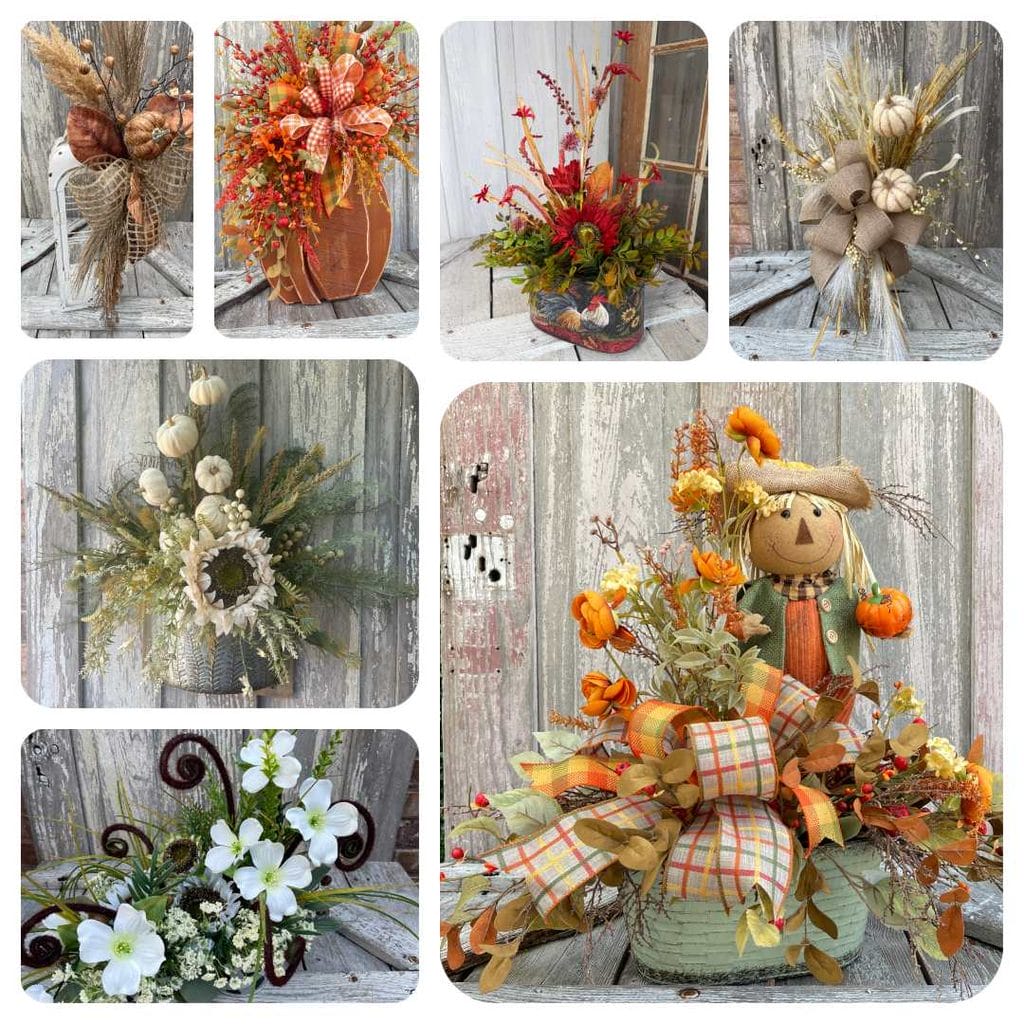
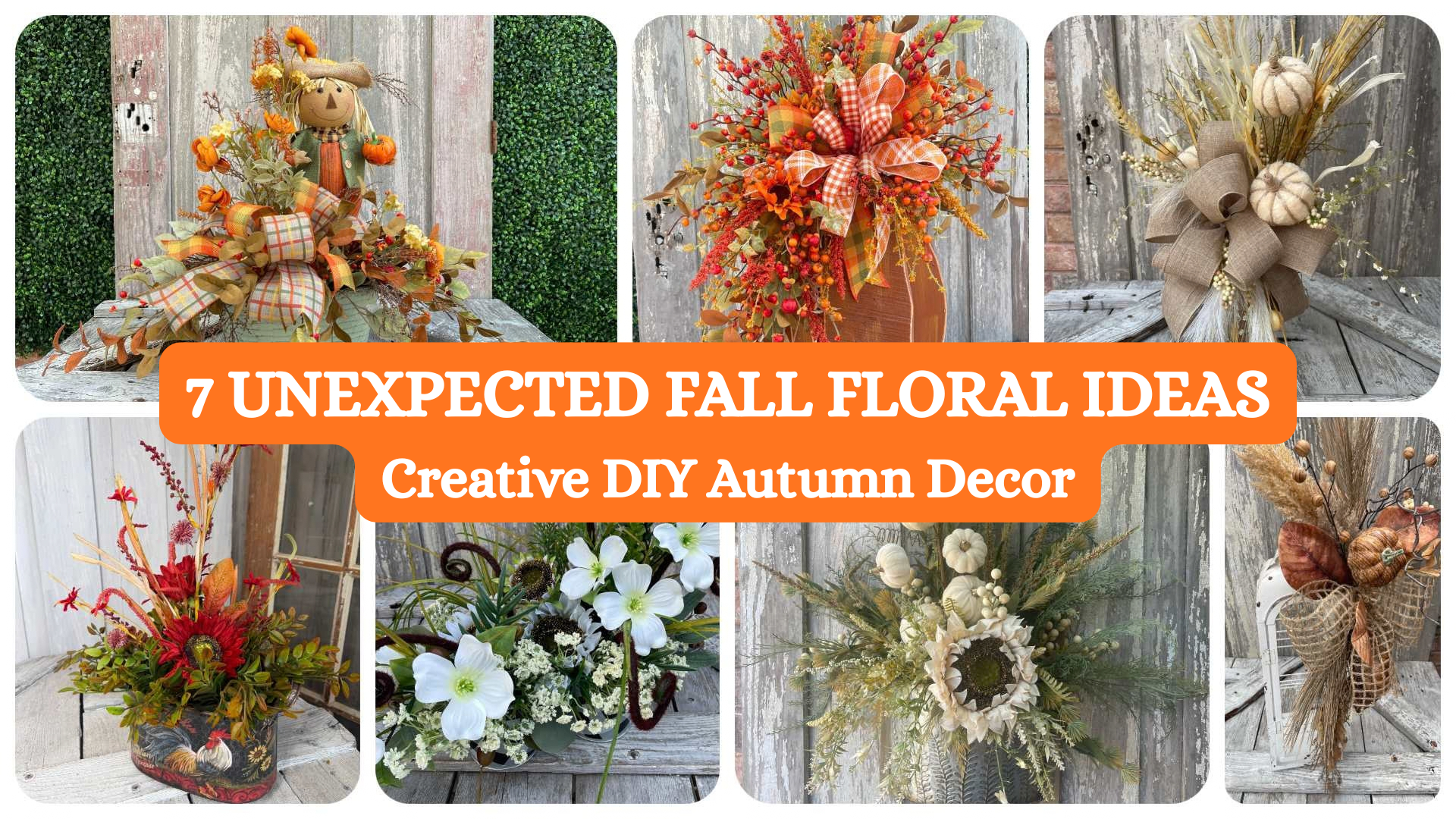
These seven fall floral designs prove that creative bases can completely change the personality of a project. From rustic wood pumpkins and decorative buckets to wall pockets, candlesticks and rooster containers, Kelea shows how to turn everyday and unexpected objects into beautiful seasonal decor.
Along the way, you’ll discover practical floral design techniques for creating movement, layering textures, securing materials and choosing the right focal points.
Explore all 7 Fall Floral Designs Using Unexpected Bases
Watch All 7 Creative Fall Floral Designs
See how Kelea approaches seven different bases and adapts her floral design techniques to fit each one.
The important lesson isn’t simply choosing an unusual container. It’s understanding how the shape, size and personality of that container should influence the finished arrangement.
1. Wood Pumpkin Arrangement — Turn Seasonal Decor Into a Floral Base
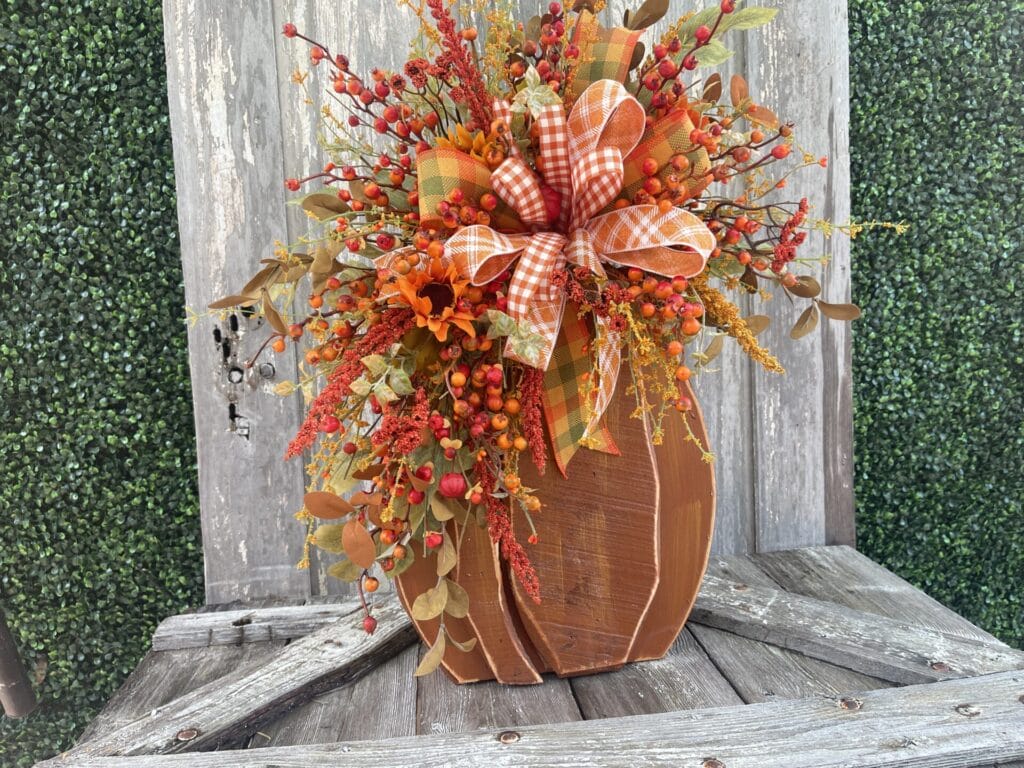
A decorative wood pumpkin becomes the foundation for an autumn arrangement filled with colorful ribbon, berries, greenery and sunflower accents.
Instead of placing a separate floral arrangement beside the pumpkin, Kelea builds directly onto it.
Design lesson: Establish the perimeter first
By securing floral foam to the pumpkin, Kelea creates a place to build a detailed, swag-inspired floral cluster.
She starts with greenery to establish the outline, plans where the bow will sit, and then adds shorter layers of texture.
The result is a pumpkin decoration that feels like one complete design rather than two unrelated pieces.
Explore the Wood Pumpkin Arrangement
2. Bucket Sunflower Arrangement — Combine Rustic Containers With Bold Florals
A rustic bucket provides a charming alternative to a traditional centerpiece container.
Bright autumn sunflowers, berries and layered ribbon bring color and height to the design, while the bucket creates a sturdy visual foundation.
Design lesson: Let the container influence your color choices
Notice how the warm floral colors complement the rustic finish of the bucket.
The container is not merely something holding the flowers. It contributes to the finished arrangement’s personality.
When choosing an unexpected base, look for colors, textures or details you can repeat in your floral materials.
Explore the Bucket Sunflower Arrangement.
3. Scarecrow Side Table Arrangement — Create a Playful Focal Point
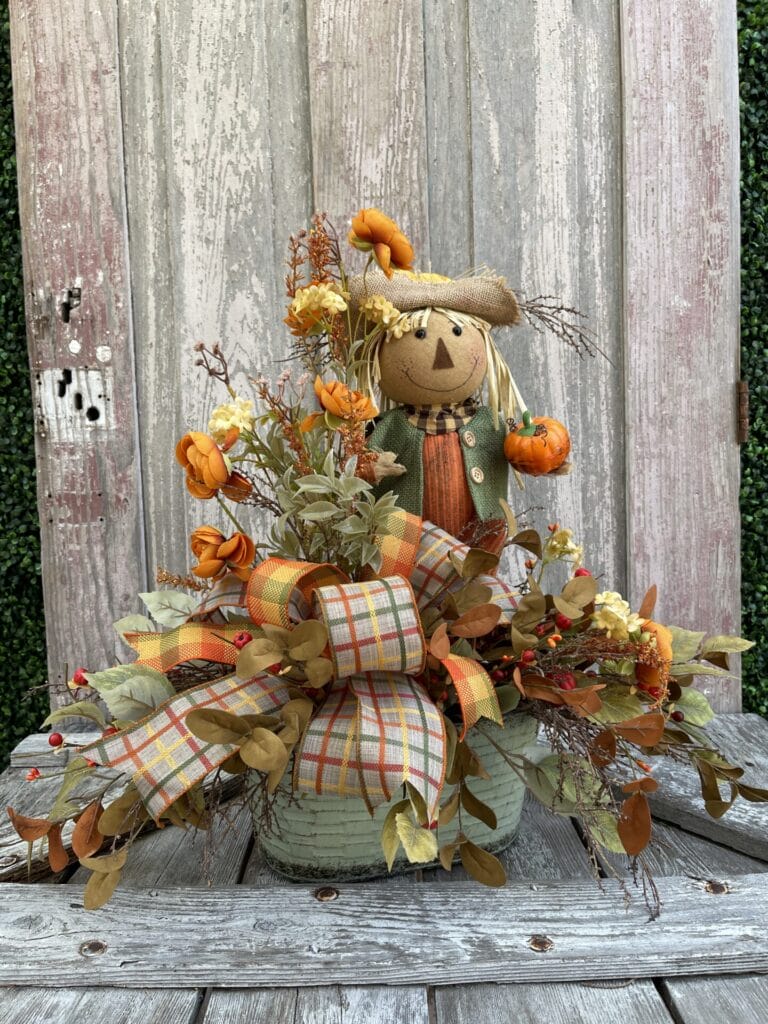
A cheerful scarecrow becomes the centerpiece of this whimsical autumn arrangement.
Pumpkins, colorful ribbon, greenery and seasonal florals surround the scarecrow without hiding its personality.
Design lesson: Keep the main character visible
When you’re working with a decorative figure, the focal point needs room to shine.
Kelea uses surrounding florals to support the scarecrow rather than compete with it.
This approach works especially well for seasonal characters, signs and other decorative attachments.
Explore the Scarecrow Side Table Floral Arrangement.
4. Fall Candlestick Arrangement — Create Height Without a Large Container
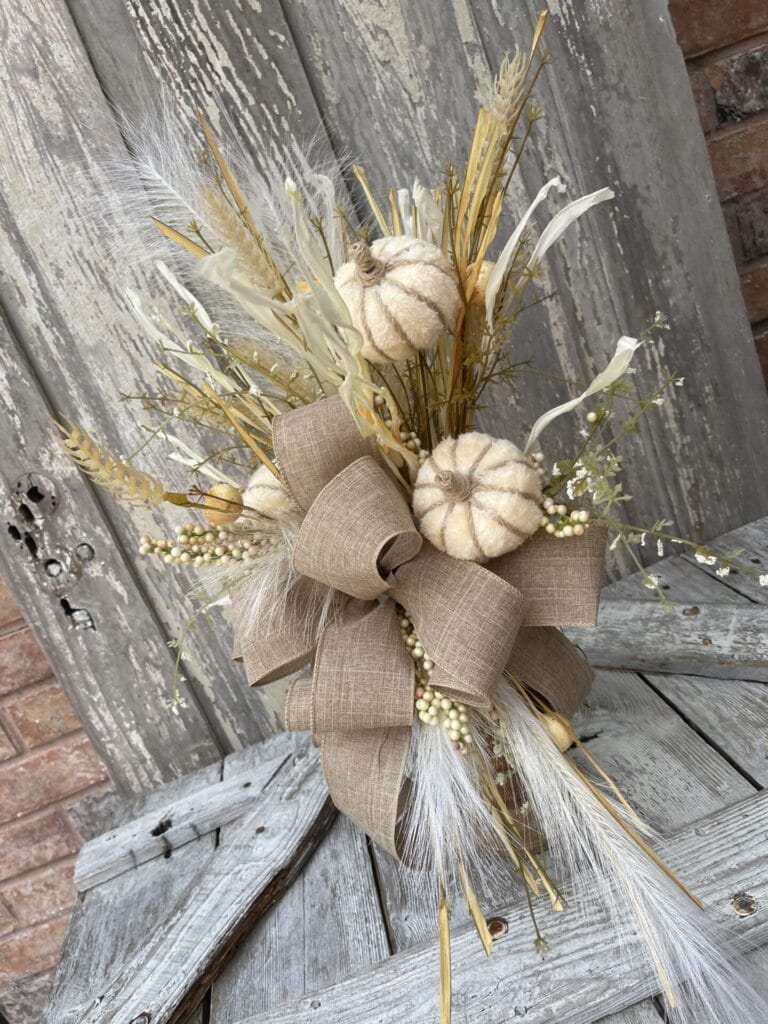
A candlestick becomes the foundation for a compact pumpkin arrangement filled with berries, grasses and soft autumn texture.
This project demonstrates how a small amount of floral foam can transform a decorative object into an elevated centerpiece.
Design lesson: Start small and control your proportions
Kelea positions three pumpkins at different heights before adding the surrounding filler.
She keeps the arrangement relatively low and compact so the floral materials remain proportional to the candlestick.
Then she fills around the pumpkins, adds a bow and uses Spanish moss to conceal the mechanics.
It’s a useful reminder that a beautiful arrangement doesn’t have to be enormous
Explore the Fall Candle Stick Arrangement.
.
5. Fall Floral Lantern Swag — Decorate Beyond the Traditional Wreath
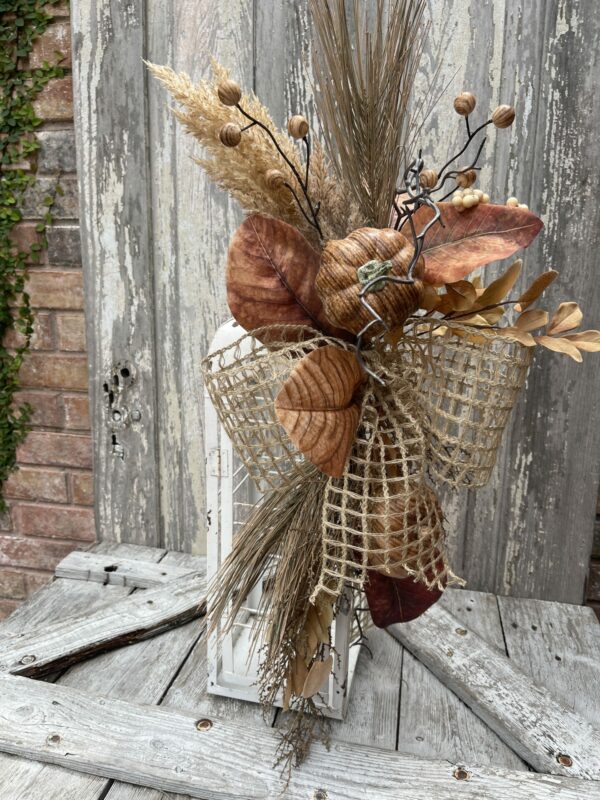
A lantern provides another opportunity to create an autumn floral accent without using a wreath base.
The floral cluster can introduce seasonal color and texture while allowing the lantern itself to remain recognizable.
Design lesson: Use directional movement
A swag-style arrangement benefits from stems that travel in different directions.
Rather than filling every available space, establish the main lines first. Then add shorter pieces that support those lines.
This helps the finished decoration feel flowing and intentional.
Explore the Fall Floral Lantern Swag
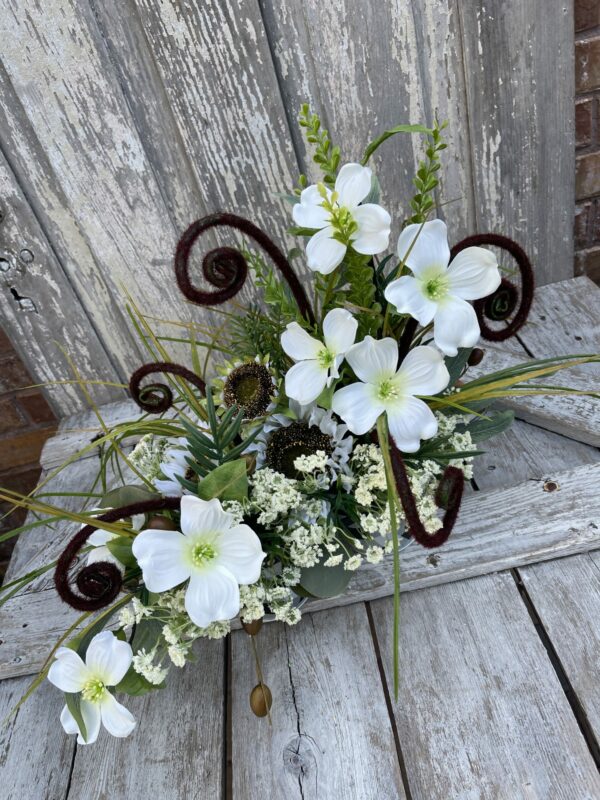
6. Boho Wall Fall Floral Arrangement — Make a Wall Pocket the Star
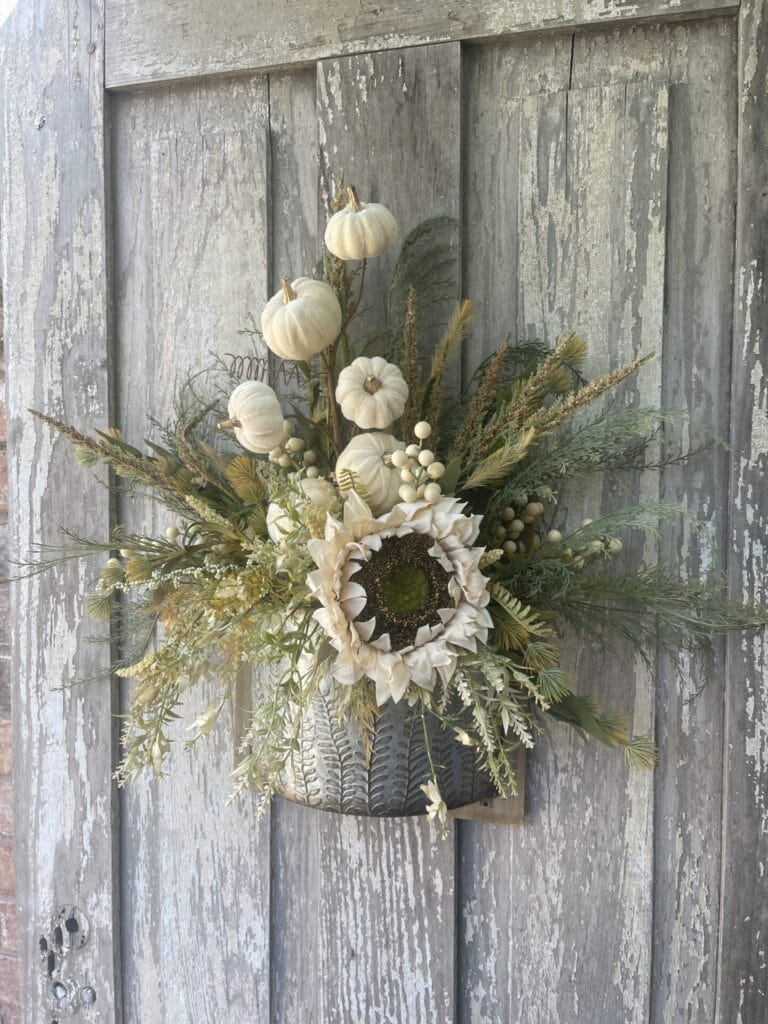
A wall pocket with a galvanized appearance and aged detailing becomes a distinctive base for a soft, natural autumn arrangement.
Kelea combines greenery, textured berries, wispy materials and focal florals to create a design that extends beyond the container.
Design lesson: Break the plane of the container
Instead of keeping every stem inside the edges of the wall pocket, Kelea allows materials to extend outward and forward.
She also shapes wired greenery to make the most of its natural-looking movement.
This creates depth and helps the florals visually connect with the container.
Wall pockets are especially useful when you want something different from a traditional front door wreath.
Explore the Boho Wall Fall Floral Arrangement.
7. Country Kitchen Rooster Arrangement — Let the Container Set the Theme
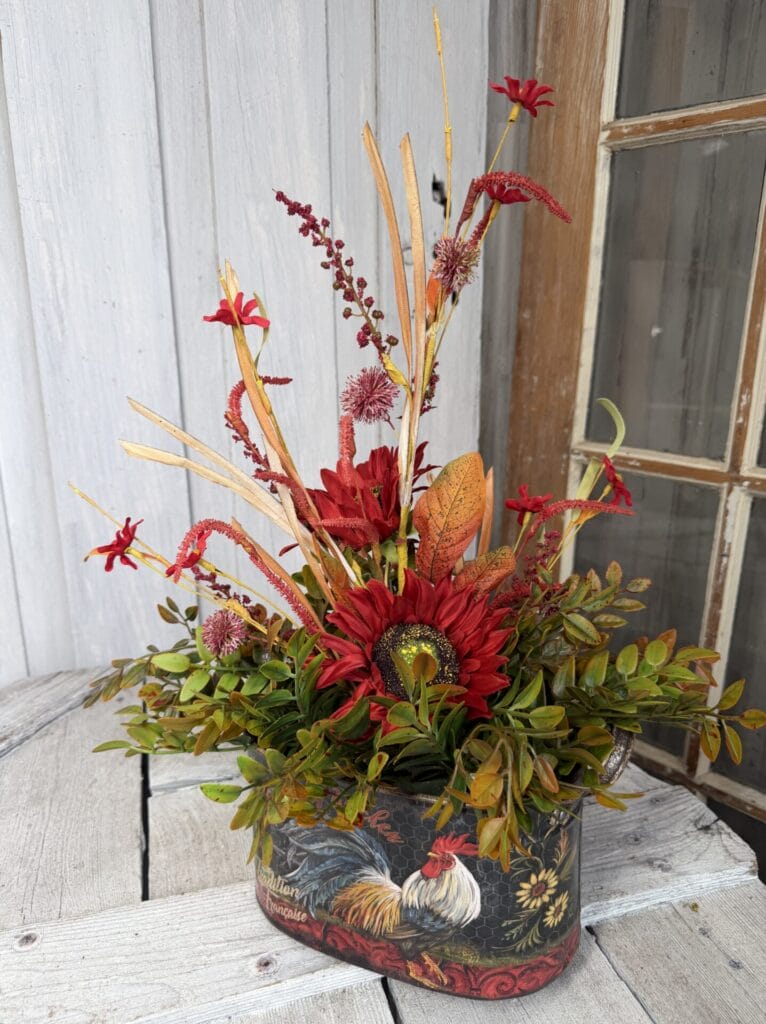
A decorative rooster container becomes the starting point for a charming country kitchen floral arrangement.
Barn-red sunflower accents and textured greenery complement the container’s rustic personality.
Design lesson: Build from the perimeter inward
Kelea begins by positioning greenery around the container’s edge.
Next, she separates the sunflower spray into usable sections, varying the height of the flowers.
Finally, smaller greenery pieces fill the center.
This creates a balanced arrangement without covering the rooster container.
See the Country Kitchen Rooster Arrangement Kit
What These 7 Fall Floral Designs Teach Us
Although the finished arrangements look completely different, several important techniques connect them.
Choose the base before planning the flowers
The size, shape and style of your base should influence the floral materials you select.
A tall candlestick needs different proportions than a broad bucket or vertical wall pocket.
Establish the silhouette before filling openings
Begin with the longest or most important stems.
Once the outline is established, shorter materials can fill the interior without changing the overall shape.
Work with different depths
Not every stem should sit at the same level.
Some materials belong toward the back, while others should extend forward to create dimension.
Break apart floral bushes when needed
Large bushes can often be divided into smaller sections.
This gives you more control over placement and helps distribute color and texture throughout the design.
Hide the mechanics
Floral foam, glue and attachment points should support the arrangement without becoming part of the visible design.
Kelea often uses Spanish moss, greenery and overlapping materials to create a cleaner finish.
Which Unexpected Base Should You Try First?
If you’re new to floral design, consider beginning with a small rooster arrangement or compact candlestick centerpiece.
If you enjoy bold seasonal decorating, the wood pumpkin or scarecrow arrangement offers plenty of personality.
For something softer and more natural, try the boho wall pocket or another design that uses wispy textures.
The best choice is a base that fits your decorating style and gives you room to practice the techniques you want to learn.
Frequently Asked Questions
What can I use instead of a vase for fall floral arrangements?
Decorative buckets, wall pockets, candlesticks, seasonal figurines and wood pumpkins can all become creative floral bases when they can safely support the arrangement.
Can you attach floral foam to a decorative pumpkin?
Yes, depending on the pumpkin’s construction. Kelea demonstrates attaching foam to a suitable surface before building the floral arrangement. Make sure the attachment is secure and appropriate for the material.
How do you make an arrangement look fuller without adding more flowers?
Shape wired greenery, vary stem heights, use different depths and separate larger bushes into smaller sections. These techniques can make better use of the materials you already have.
What makes an unusual floral container work?
Look for a stable base with a shape, color or texture that complements your flowers. The finished design should feel connected to the container rather than simply sitting on top of it.
Are these ideas only for autumn?
No. The same techniques can be adapted to Christmas, spring, everyday floral arrangements and other seasonal decorating projects.
Learn More With Kelea’s Design School
Choosing the right base is only the beginning.
In Kelea’s Design School, Kelea teaches the principles behind floral design, including proportion, movement, depth, balance and secure construction.
These are skills you can use whether you’re decorating your own home or creating floral designs to sell.
Find Your Next Creative Fall Floral Project
You don’t have to start every autumn project with a traditional wreath or vase.
Sometimes the most interesting arrangements begin with a pumpkin, a wall pocket, a rustic bucket or a decorative container you already love.
Explore these seven fall floral designs, choose your favorite unexpected base and see what you can create.
Explore Compilation 1635 — Fall Floral Designs Using Unexpected Bases