6 Muted Fall Floral Designs to Inspire Your Autumn Decorating
Muted fall floral designs are a beautiful way to decorate for autumn without covering everything in bright orange.
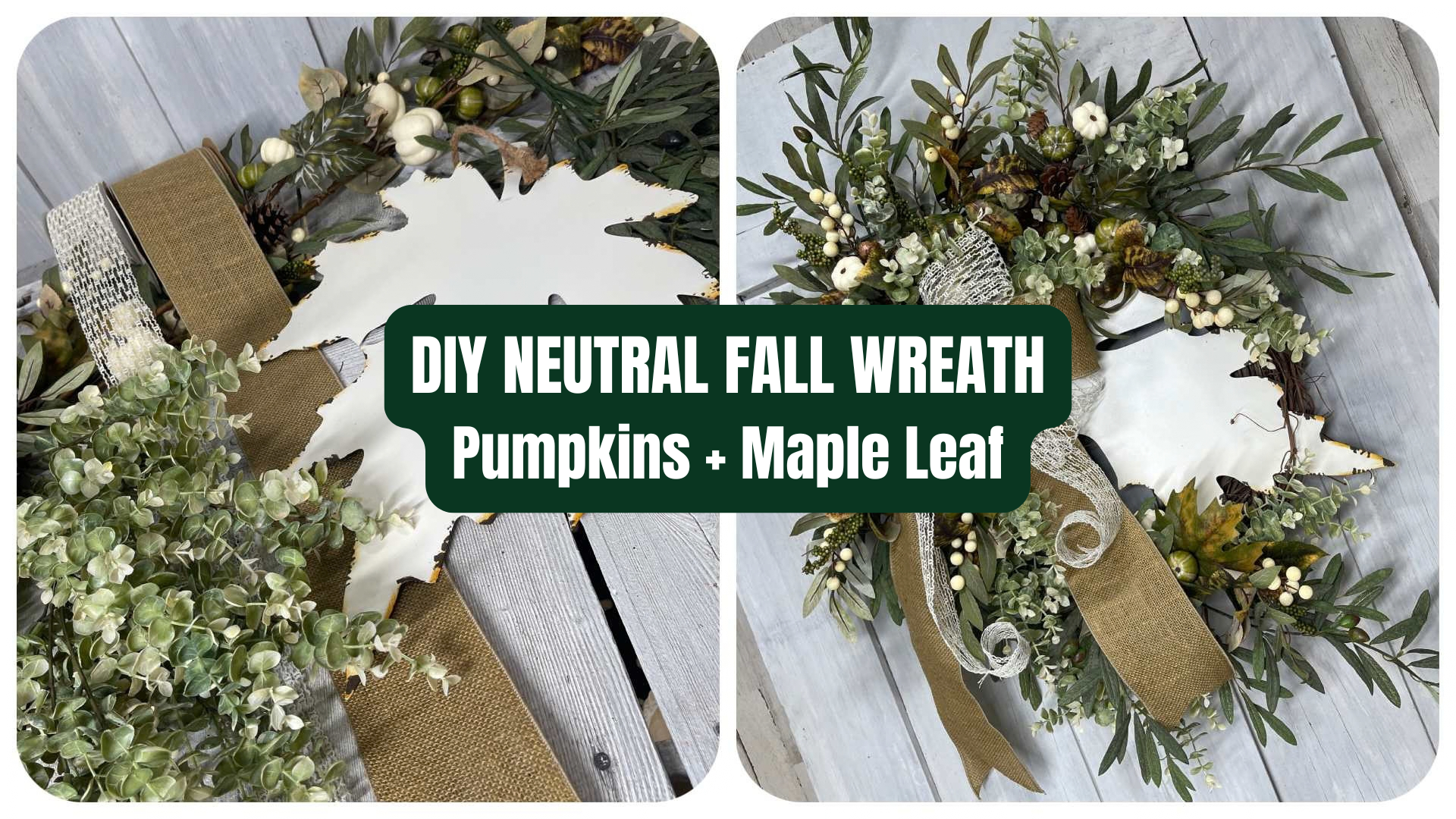
If you love decorating with softer autumn colors, these muted fall floral designs are full of inspiration. From white pumpkins and eucalyptus to berries, pods, grapevine, and natural textures, these six projects show how beautiful fall décor can be without relying on bright traditional colors.
In this compilation, Kelea creates six completely different fall projects—a candle ring, floral arrangement, and four distinctive wreath and swag designs—while showing you how the same professional floral design principles can work across different shapes and styles.
You’ll see how thoughtful placement, movement, layering and color choices turn individual stems into designs that feel intentional and beautifully finished.
The six projects featured in this collection are:
- Cozy Cottage Fall Wreath or Candle Ring
- Fall Natural Pumpkin Floral Arrangement
- Fall Forest Wreath
- Rustic Pumpkin Wreath
- White Pumpkins, Eucalyptus and Pods Fall Swag
- White Pumpkin Garland Wreath
Each project has its own personality, but together they show just how much you can do with a softer fall color palette.
See the complete supply lists for all six projects:
[Muted Fall Floral Designs Compilation Supply List]
1. Muted Fall Pumpkin Floral Arrangement
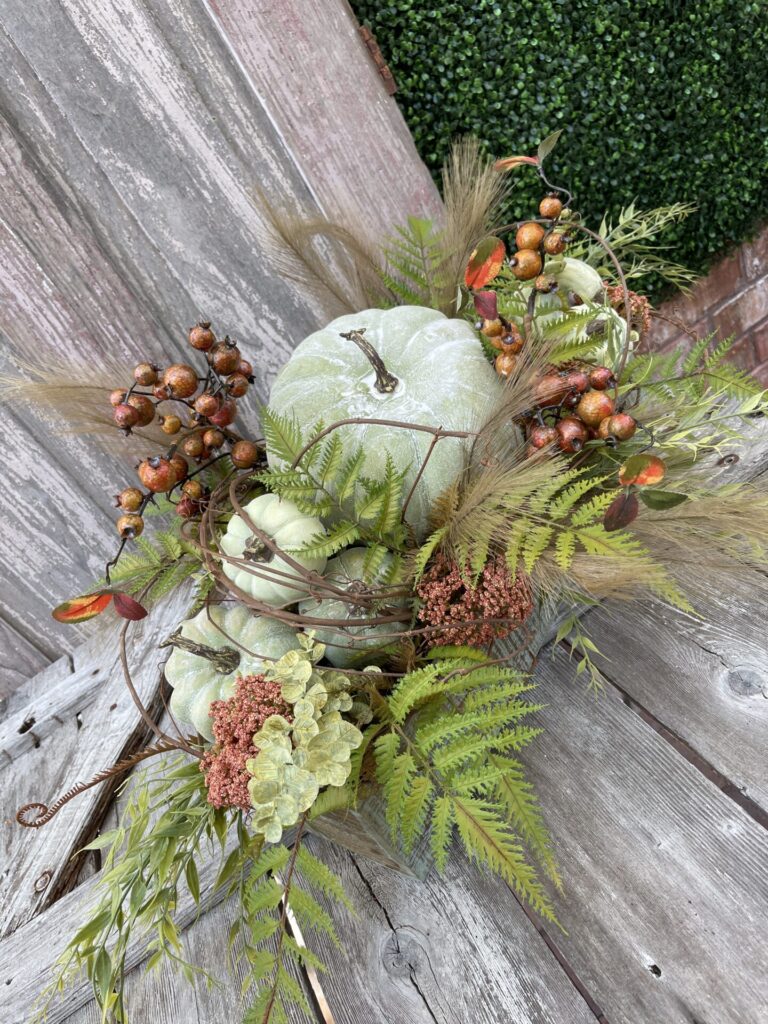
If your favorite fall decorating style looks like you walked through the woods and gathered everything that caught your eye, this arrangement is for you.
The design begins with grapevine and a large pumpkin before layers of greenery, smaller pumpkins, coral-toned accents, eucalyptus, fern and wispy pampas begin filling the arrangement.
Rather than forcing the grapevine into a perfectly controlled shape, Kelea works with its natural movement. That becomes part of the finished design.
Create the Shape Before Filling the Arrangement
One of the most important lessons in this project is establishing your overall shape before filling every open space.
Kelea uses fern to begin setting the perimeter and establishes a transition point where the direction of the floral materials changes.
From there, the placement builds outward.
That gives the arrangement structure even though the finished design feels wonderfully organic.
Use Triangle Placement for Balance
You’ll also see triangle placement used throughout this arrangement.
Instead of placing identical stems directly opposite one another, materials are grouped into visual triangles. The result feels balanced without becoming perfectly symmetrical.
That’s an important distinction when you’re trying to create a natural-looking floral arrangement.
Layer for Depth and Dimension
Greenery moves over and underneath the grapevine. Pumpkins sit at different heights. Some materials stay close to the center while others stretch beyond the arrangement.
Those layers create depth and dimension.
A design can contain beautiful materials and still look flat if everything sits on the same visual plane. Varying the placement gives your eye places to travel throughout the arrangement.
Add Just Enough Color
However, muted doesn’t have to mean colorless.
Coral berries and coordinating floral accents introduce warmth against the green and cream pumpkins without overpowering the softer palette.
The berries are saved until near the end and allowed to crawl over and around the pumpkins, continuing the lines already established by the grapevine.
It’s a small detail that creates a big finish.
2. Rustic Muted Fall Pumpkin Wreath
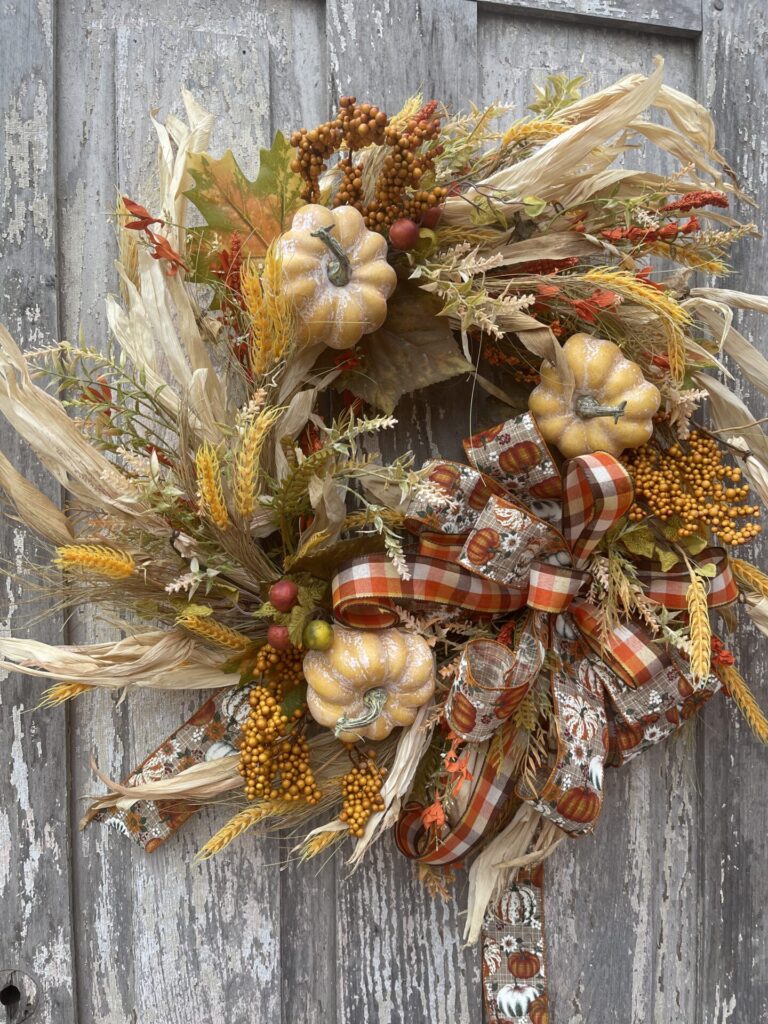
This rustic pumpkin wreath is a great example of letting a beautiful wreath base do some of the work for you.
The base already contains corn husks, wheat-inspired details and twiggy textures, creating plenty of dimension before the first additional stem goes in.
Neutral pumpkins, mustard berries, orange accents and layered ribbon build on those existing colors instead of covering them up.
Start by “Shaking Hands”
Before designing, take time to open and shape wired materials.
Kelea calls this shaking hands.
Spread leaves apart. Separate berries. Bend wired pieces into natural positions. Give each element its own space.
It can be tempting to skip this step, but properly shaping your materials before placing them can completely change the finished design.
Follow the Flow of Your Wreath
Once your wreath establishes a direction, continue following it.
If the existing materials naturally sweep clockwise, newly added berries and greenery should support that movement rather than suddenly fighting against it.
Think of the wreath as having a current.
Once your eye begins following that current, every new addition should help carry it through the design.
Save Room for the Bow
Before permanently attaching your florals, decide where your bow will live.
Creating a bow zone before filling the wreath prevents you from covering beautiful materials later or trying to squeeze a bow into a space that is already too full.
Once the bow is attached, smaller pieces of greenery and florals can be worked around it so the ribbon becomes part of the design instead of looking like something attached on top.
3. Fall Forest Wreath
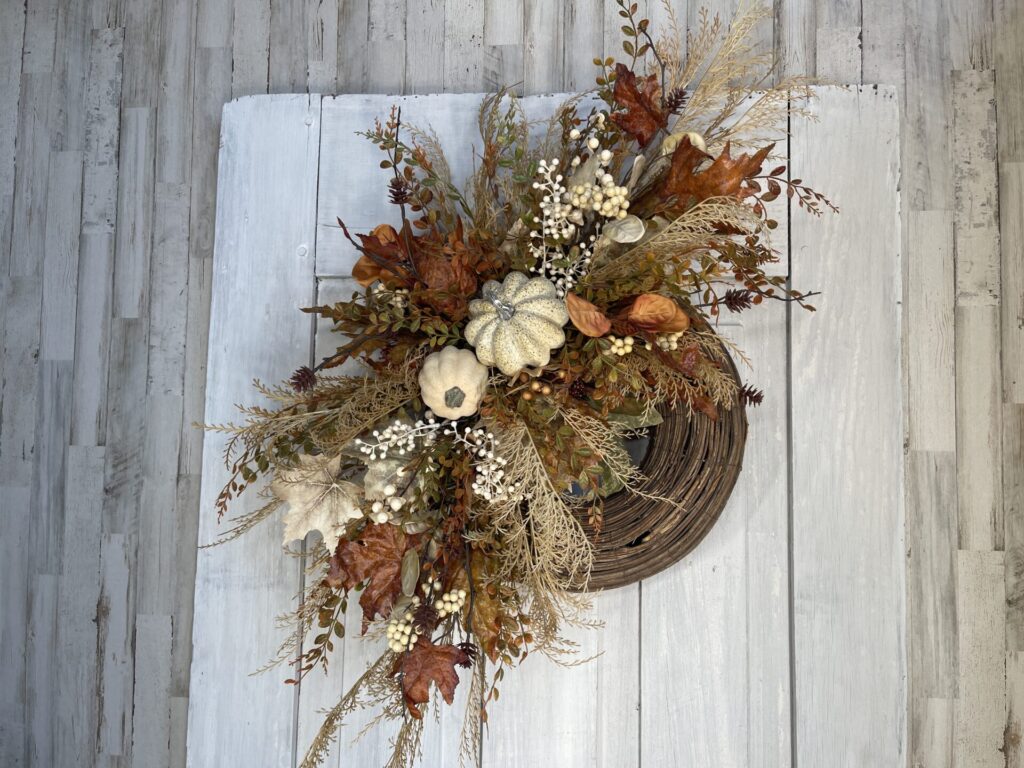
The Fall Forest Wreath takes the muted fall palette in a more flowing, elegant direction.
Instead of relying on traditional orange as the dominant color, the design uses deeper autumn greenery, soft pumpkins and dried-looking textures.
The result feels earthy, sophisticated and wonderfully seasonal.
Floral Foam Makes Placement Forgiving
This project uses floral foam within the wreath base to create the arrangement.
If you’re newer to floral design, foam can be incredibly helpful because it gives you freedom to experiment with placement before committing.
You can adjust your angles, change directions and move stems until the lines of the design feel right.
Think About Direction Before Decoration
Before adding lots of florals, decide where the design will live on the wreath and which direction you want the finished arrangement to travel.
That initial decision controls everything that follows.
Instead of asking, “Where should I put this flower?” with every stem, you’re asking, “How does this piece support the line I’ve already created?”
That simple shift makes designing much easier.
4. Cozy Cottage Fall Wreath or Candle Ring
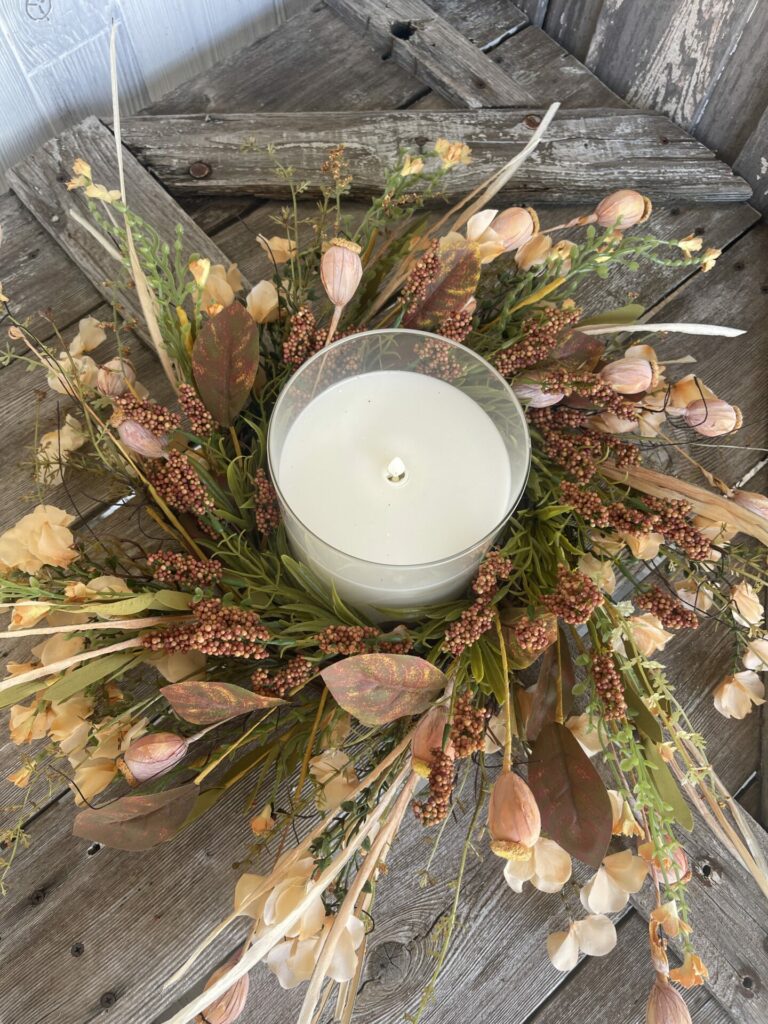
One project. Two completely different ways to use it.
This neutral fall design can hang as a wreath or lie flat around a large battery-operated pillar candle to become an oversized candle ring.
That’s a great idea when you want seasonal décor that can move around your home.
Hang it on an interior door or wall, then use it as a table centerpiece when you’re entertaining.
Set the Perimeter First
Kelea begins by setting the perimeter with a lantern spray filled with twiggy texture.
Setting the perimeter establishes the outer boundaries of your design.
Before worrying about every little hole, you’re deciding:
- How large will the design appear?
- Where will the longest pieces reach?
- What shape are you creating?
- How will your eye move around the arrangement?
Once that framework is established, filling the interior becomes much easier.
Bring Color from the Background to the Foreground
One of the techniques that makes this project look especially dimensional is repeating colors at different depths.
A fern or color introduced toward the back isn’t necessarily finished doing its job there. A smaller piece can return near the foreground.
That repetition visually connects the layers.
Hide the Mechanics
Professional-looking floral design isn’t only about what you add.
It’s also about what you don’t see.
Foam, wire, glue and cable ties are construction tools—not decorative elements.
As the design nears completion, use small greenery clusters to cover open areas and disguise mechanics from as many viewing angles as possible.
5. White Pumpkins, Eucalyptus and Pods Fall Swag

White pumpkins give fall decorating an entirely different personality.
Pair them with eucalyptus, pods and earthy greenery and you get autumn décor that feels seasonal without depending on the traditional orange-and-red color palette.
This swag is especially useful if your home already features whites, creams, natural woods or other neutral colors.
Use Movement to Make Greenery Look Natural
Wired stems are meant to be shaped.
Rather than leaving greenery straight and flat, gently curve and bend the pieces so they appear to have natural movement.
That movement creates dimension and keeps a long swag from looking rigid.
Break the Plane
Another technique Kelea teaches is breaking the plane.
Instead of keeping every piece neatly separated into its own visual area, allow greenery or another element to cross in front of the bow or overlap nearby elements.
That little overlap connects the layers and helps the finished swag look cohesive rather than assembled in sections.
6. White Pumpkin Garland Wreath
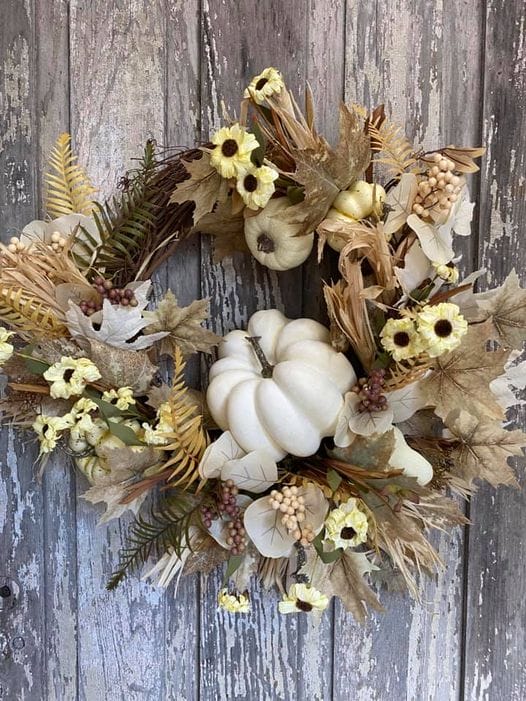
The White Pumpkin Garland Wreath is another beautiful example of creating fall décor with a softer palette.
White pumpkins, eucalyptus, pods and natural greenery create plenty of autumn character without requiring bright seasonal colors.
In addition, the garland construction gives you opportunities to create movement that feels different from a traditional wreath built stem by stem.
Look for places where materials can sweep through the design, overlap one another and create an intentional line.
How to Choose Colors for Muted Fall Floral Designs
Muted fall decorating isn’t simply removing orange.
The trick is replacing high-contrast color with texture, depth and tonal variation.
Try combining colors such as:
- Cream
- White
- Soft green
- Eucalyptus green
- Brown
- Beige
- Muted coral
- Mustard
- Soft rust
- Natural wood tones
Then let texture create the interest.
Think pumpkins beside wispy fern. Smooth eucalyptus against twiggy grapevine. Soft ribbon against pods and berries.
When the color palette gets quieter, texture gets a chance to do more of the talking.
5 Techniques for Muted Fall Wreaths and Floral Designs
Although these six projects look very different, several of the same design principles appear throughout the compilation.
1. Set Your Perimeter
Establish your outside shape early so you know where the design is going.
2. Create a Direction
Choose the flow of the design and keep supporting it with each new layer.
3. Use Placement Patterns
Triangle placement and long-and-short piggyback placement help create balance without making your work look overly symmetrical.
4. Build Depth
Work some pieces deep into the design, keep others in the middle and allow select materials to move into the foreground.
5. Hide Your Mechanics
Before calling a project finished, look at it from multiple angles. Cover exposed foam, wire, glue and other construction elements with strategically placed greenery or moss.
These are the kinds of principles that transfer from one project to the next. Once you understand why the placement works, you’re no longer limited to copying a single design.
Want to Learn More Floral Design Techniques?
If you love learning the why behind floral design—not just where to stick the next stem—Kelea’s Design School takes these techniques much further.
You’ll learn how to work with placement, direction, color, depth, dimension, mechanics and different design structures so you can use those skills in wreaths, swags, centerpieces, arrangements and more.
[Learn More About Kelea’s Design School]
Frequently Asked Questions About Muted Fall Floral Designs
What are muted fall colors?
Muted fall colors are softer versions of traditional autumn shades or neutral colors inspired by the season. Cream, white, eucalyptus green, brown, beige, mustard, muted coral and soft rust can all work beautifully.
Can I decorate for fall without using orange?
Absolutely. White and cream pumpkins paired with eucalyptus, pods, berries, fern and natural textures still read as distinctly autumnal. Texture and seasonal shapes can communicate fall just as effectively as color.
How do I keep a neutral fall wreath from looking flat?
Use several types of texture and vary the depth of your materials. Combine broad leaves with delicate fern, berries, pods, pumpkins, twigs and wispy stems. Place some materials deep inside the design and allow others to reach forward.
What does setting the perimeter mean in floral design?
Setting the perimeter means using your first materials to establish the outside shape and approximate size of the finished arrangement. It gives you a framework to follow as additional layers are added.
How do you create movement in a fall wreath?
Follow the natural direction of your wreath base, angle stems instead of placing everything straight, curve wired materials and repeat directional lines throughout the design.
How do I make a wreath look professionally finished?
Pay attention to placement and construction as well as materials. Create depth, maintain consistent movement, integrate your bow into the florals and hide visible mechanics such as wire, foam, glue and cable ties.
Can these fall designs work through Thanksgiving?
Yes. Pumpkins, berries, eucalyptus, natural greenery and muted autumn colors transition beautifully through the fall season and into Thanksgiving decorating.
Create Your Own Muted Fall Look
You don’t need bright colors to make fall décor stand out.
Sometimes the quieter combinations are the ones that make you stop and look closer.
These muted fall floral designs give you six very different ways to decorate for autumn while keeping the color palette soft and natural.
White pumpkins nestled into eucalyptus. Wispy greenery moving through grapevine. Soft coral berries winding around a centerpiece. Pods, fern, corn husks and natural textures layered together.
Each of these six projects has a completely different shape and personality, but the same core design principles connect them.
Use the compilation as inspiration, choose the project that speaks to you, and then make it your own.
Ready to start creating?
[See the Muted Fall Floral Designs Compilation Supply Lists]